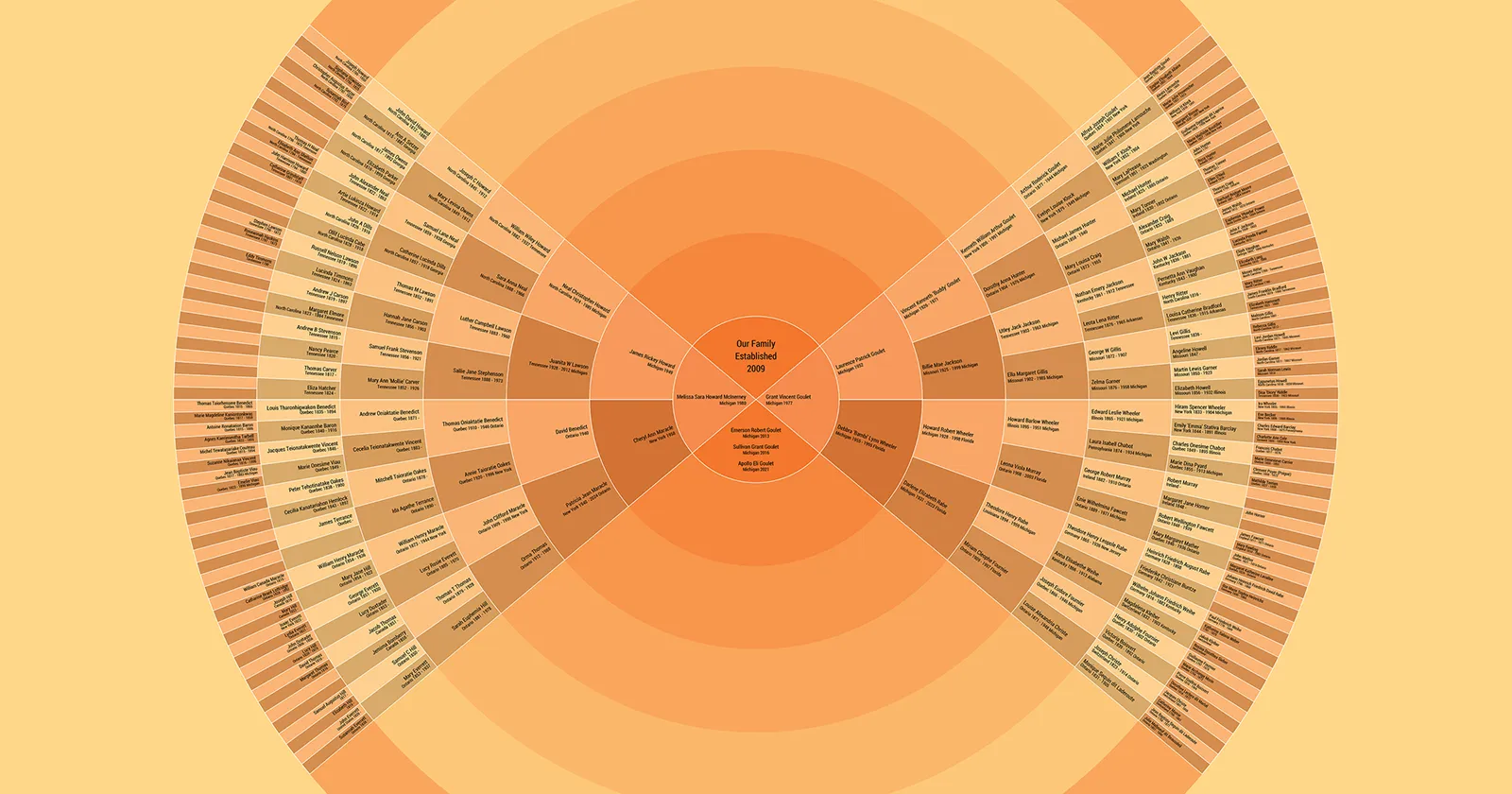
There's a moment every genealogist knows. The tree is built — six generations verified, the stubborn great-grandmother finally sourced, the immigrant ancestor's ship found. Years of late nights, done.
And then... nothing. The tree sits in a database, opened by exactly one person in the family: you.
You didn't do all that work to be its only visitor. Here are five things to do with a finished tree — "finished" meaning built, since no tree is ever truly done — ranked by how much life they give it.
1. Put it on the television
The living room is where the family already gathers, so it's the natural home for the family's story. A TV-native app like Bright Branches turns the tree into the whole screen: full-color, six generations wide, explorable from the couch with the remote. A grandparent can land on their own parents and watch the room lean in. Kids scroll to the rim and find themselves at the edge of something enormous.
This is the highest-leverage option because it's the only one that makes the tree communal. Every other format still has an audience of one or two. If your tree lives on FamilySearch, it's also the fastest — sign in and it's on the wall, free to start.
2. Print it beautifully
A well-made fan chart is genuinely lovely on paper — a wedding-worthy, wall-worthy object. Generate a print-ready PDF or JPG of your chart and take it to any local print shop for a large-format print. (Bright Branches includes printing on every plan, including the free one; plenty of desktop genealogy programs offer chart exports too.) A framed six-generation fan in the hallway starts more conversations than any database ever will.
3. Share view access with the family
Most platforms let relatives see the tree without touching your research. FamilySearch trees are shared by nature; GEDCOM-based trees can be shared by email invite in Bright Branches, view-only, revocable anytime. The point is to lower the barrier from "ask Uncle Grant to show you sometime" to "open it whenever you're curious."
4. Pair the names with the records
A name and two dates is a fact. A 1910 census page showing the same person at age four — that's a life. If your platform displays source records alongside profiles, spend an evening walking one ancestor's documents end to end with a family member. It's the difference between reciting the tree and telling it.
5. Make it the centerpiece of a gathering
Family reunion, holiday dinner, family history night — put the tree up on the big screen and let people take turns with the remote. The questions do the rest. ("Who are the Quebec people?" "Why does this whole branch come from Tennessee?") No slideshow or handout generates that, because those are presentations. An explorable tree is an invitation.
The pattern
Every option on this list does the same thing: it moves the tree from storage to presence. The research deserves an audience, and the audience was never going to log into a genealogy database. Bring the tree to where they already are — the wall, the mantel, the television — and the work you did starts doing its real job: making the family feel the size of its own story.
Related reading: How to Display Your Family Tree on a TV · What Is an Interactive Family Tree?