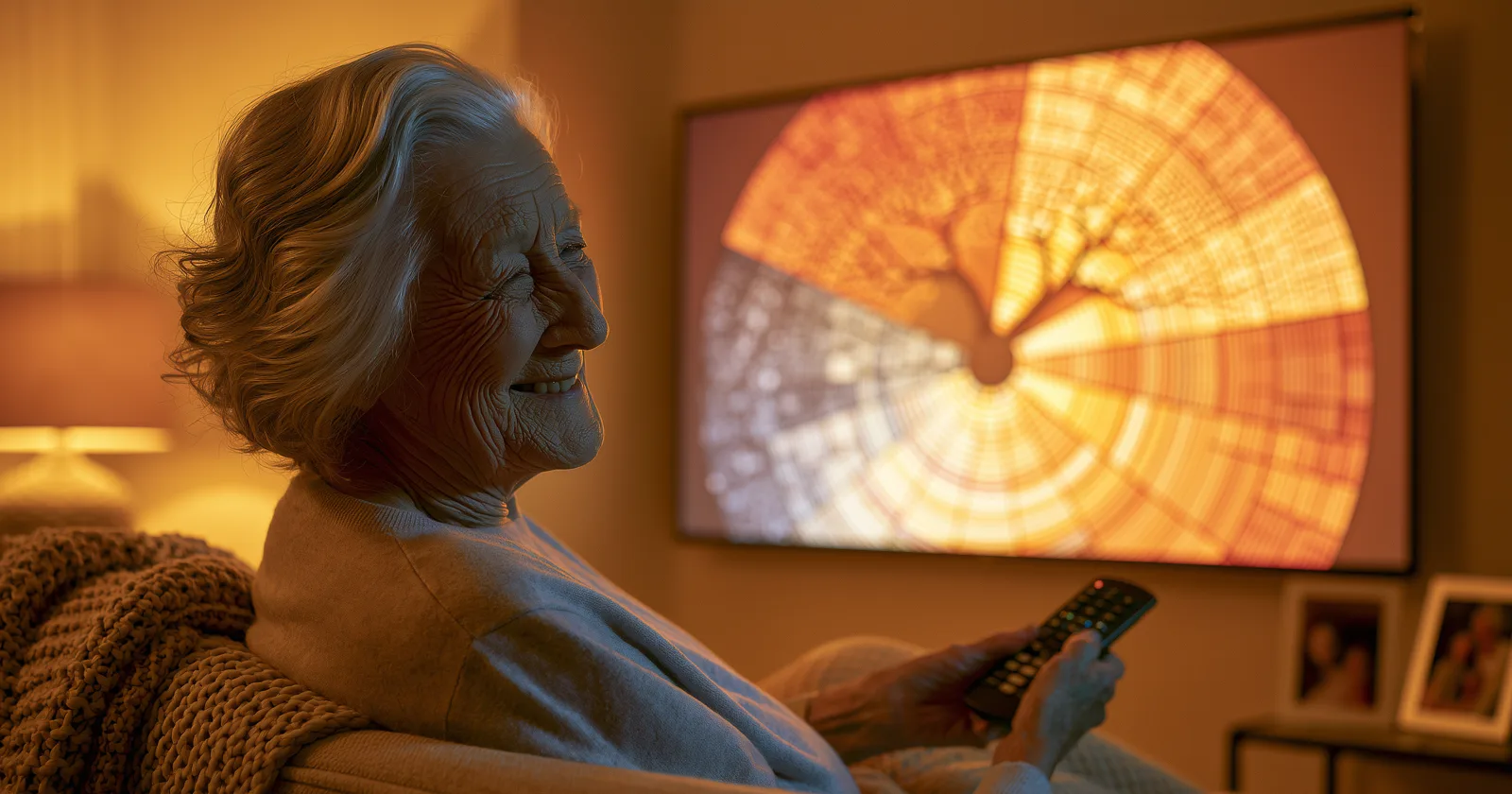
There is a moment your years of research have been building toward, and it isn't a source citation. It's your grandmother seeing her own mother's name on a screen and saying, "Oh — but did you know about her sister?"
Grandparents aren't the audience for the family tree. They're the witnesses — the only people in the room who knew the names as faces. Showing them the tree is half gift, half interview, and entirely worth doing deliberately. Here's how to do it well.
Use the television, not a laptop
A laptop makes it a demonstration: one person driving, everyone else craning. The TV makes it a gathering. Put the tree on the living-room screen — a TV-native app like Bright Branches does this directly, full-screen, steered by the same remote they already use — and the tree becomes something the room is inside of, not something being presented to it. Text at TV scale also solves the quiet problem nobody mentions: reading small print is work at eighty-five.
Start centered on them
Don't start with yourself. Re-center the tree on your grandparent before anyone sits down, so the first thing they see is their own name with their parents and grandparents arcing behind them. The difference in reaction between "here's my project" and "here's you" is the whole event.
Hand over the remote
This is the counterintuitive one. If the movement is easy enough — and it should feel effortless, like drifting rather than operating — let them steer. There's real dignity in it: they're not being shown their family, they're walking through it. Stay close, help when asked, and resist narrating.
Have the records one press away
Names spark memory; documents unlock it. When she says "we lived on a farm then," open the census page that proves it and watch what happens. A record with her childhood address on it isn't data to her — it's a photograph of a Tuesday she remembers.
Record the room
The stories that come out will not come out twice, and your memory of the afternoon will be worse than you think. Set a phone recording audio on the coffee table — ask first, then let everyone forget it's there. One hour of a grandparent narrating the tree is the most valuable source document you will ever collect, and you're the only archivist who can.
Follow the corrections
At some point they'll say the tree is wrong — a date, a spelling, a "that's not what we called him." Don't bristle; take notes. They are handing you leads no database has, and being the living authority on the family is a role worth giving someone. The tree gets its updates later, back at the source where the research lives. Today isn't for the record. It's for the memory of making it.
The point
Genealogy runs on a cruel clock: the people with the answers leave before the questions get asked. An afternoon with the tree on the big screen and a grandparent holding the remote beats a decade of archive requests. Schedule it like it matters, because it's the one part of the research that can't be done later.
Related reading: What to Do With Your Family Tree After the Research · Family Reunion Ideas: Put the Whole Family on the Big Screen